
TBI MOTION |Single Axis Actuator Introduction, Structure & Features
▶Introduction to Single-Axis Actuators |
▶Features of the Single Axis Actuator |
▶Actuator Selection |
▶Applications of Single Axis Actuators |
▶Precautions for Use |
Introduction to Single Axis Actuators:
Single axis actuators are simple, purpose-built automation devices widely used in industrial and manufacturing settings. Their movement is limited to one axis, meaning they only travel in a straight line. They feature a straightforward design, mainly composed of linear rails, ball screw nuts, a drive system (such as an electric motor or pneumatic device), and a controller. These actuators typically utilize either a ball screw drive or a belt drive for transmission. Both types rely on linear guides for guidance and can be equipped with servo or stepper motors to handle positioning, moving, and transporting tasks across various fields. Additionally, they can be combined with other robots to create two-axis or three-axis systems, serving as a core building block in industrial automation.
There are two main transmission options for single axis actuators: ball screw drives and belt drives. Both systems rely on linear guides for guidance and can be paired with servo or stepper motors to handle positioning, moving, and transporting tasks in diverse applications. Additionally, they can be combined with other robotic systems to create two-axis or multi-axis configurations, making them a core building block of industrial automation.
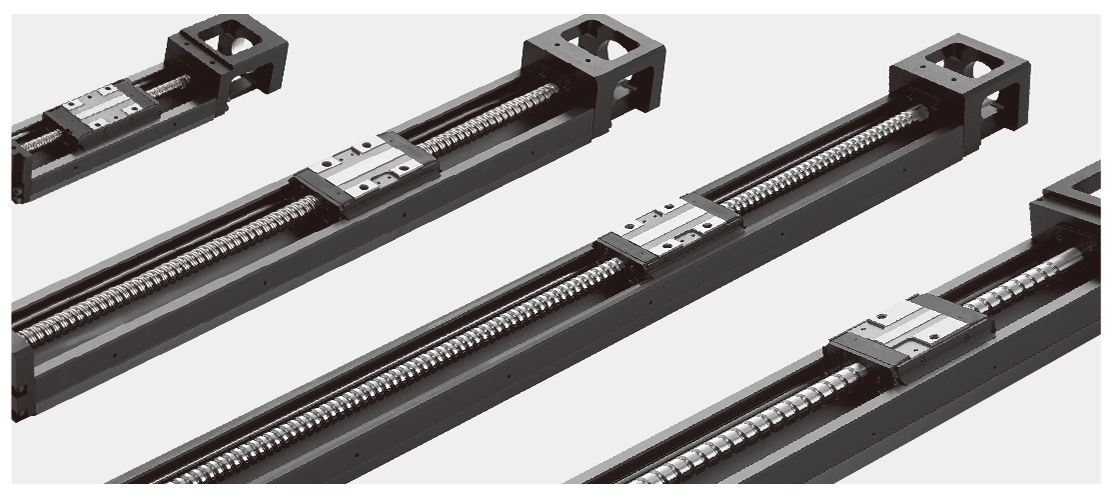
Basic Structure of TBI MOTION Actuator:
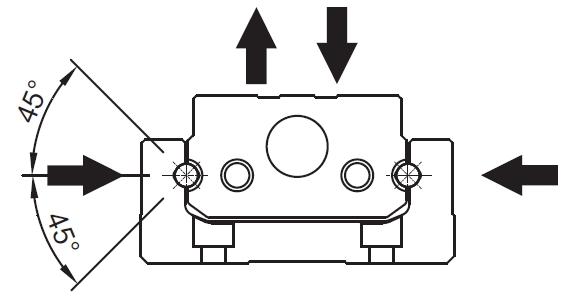
Adopting the advantages of TBI Motion linear guide and screws into an integral mechanism with the design of the nut and screw. With the highly rigid U-Rail track optimized section, it minimize the required space and the time for assembly. This ensures its demand for high rigidity and high accuracy. The ball rolling face adopts an excellent design of a 2-row Gothic arc and 45° contact angle. Moreover, the design allows the X-axis and Y-axis to bear loads from all directions.
.jpg)
Features of the Single Axis Actuator
◆Advantages of Modularized Design
The combination of ball screw and linear guide makes simple installation possible, shortens replacement time and prolong service life. The conventional linear platform device requires guides and drive elements. It features easy-assembly, high rigidity, compact in size.
◆Loads from all Directions
The contact surface of ball and groove is designed to be 45° and can bear the same rated load of any type of installation, radially, reverse-radially or laterally.
◆High Rigidity
The Ansys optimized U-Rail track design allows the track to be lightweight, accomplishing higher rigidity at a cantilever load to achieve a perfect balance between rigidity and volume.
.jpg)
◆High Accuracy, Saving Space
The variable loading minimizes the friction to meet a high accuracy demand. A combination of the nut with the slide allows minimal space and optimized allocation possible.
Actuator Selection
TBI MOTION provides the following selection of single axis actuators:

Depending on the specific dynamic and static load requirements, you can choose the ideal linear guide model based on your actual operating environment to meet different load demands.

Enhanced dust-proofing effectively minimizes foreign object ingress, ensuring overall precision, reducing machine wear, and extending service life.

A low-Assembly support unit minimizes the overall structural footprint, fitting perfectly into tight installation spaces to help optimize your equipment layout.
Purchase of Peripherals
To satisfy various industrial operations, the KP Axis Actuator can be purchased additionally with a dust cap, a dust expansion sleeve, a sensor and a motor adapting flange.
.png)
◆Dust Cap & Dust Expansion Sleeve:prevent foreign objects from entering and ensure the overall accuracy, service life and smoothness.
◆Motor Adapting Flange:fit for different motors and secured on the Single Axis Actuator.
◆Sensor:safety protection device which assists with slide positioning, original start up and traveling.
Additionally, suitable products can be recommended through the TBI service life website, based on customer requirements.
Applications of Single-Axis Actuators
Due to their linear motion characteristics, single-axis actuators are ideal for handling simple and repetitive operations, effectively reducing the equipment footprint while ensuring product consistency and quality.
The following are the primary industries where single axis actuators are applied:
Single axis actuators are commonly utilized for the assembly, testing, handling, gluing, dispensing, and welding of precision components. They are perfectly suited for high-precision production environments, such as smartphone assembly, optical component positioning, and the handling of parts within other electronic devices.
On production lines, single axis actuators can perform simple handling, assembly, and processing operations. They are particularly well-suited for industries requiring high-volume, repetitive production—such as home appliances, food packaging, and automotive parts manufacturing—thereby enhancing production efficiency while maintaining consistent product quality

In medical and laboratory automation applications, single axis actuators can be utilized for sample processing, reagent dispensing, and the assembly and inspection of medical devices. They guarantee exceptional precision and cleanliness, making them perfectly suited for laboratory automation equipment.
Single axis actuators are highly suitable for packaging and logistics systems, where they execute precise sorting, packaging, and labeling operations. Since these tasks inherently require simple linear motions, single-axis actuators can accomplish them with high efficiency.
Single axis actuators can be integrated with multi-axis robots to form a composite system, enhancing both systemic flexibility and operational precision. By pairing with multi-axis setups, single-axis actuators fulfill the system's linear motion requirements and enable more complex operations, thereby delivering higher accuracy and agility in multi-axis environments. This collaborative configuration easily handles high-precision, multi-dimensional industrial tasks, satisfying more advanced technical demands in automated workflows.
Notice on Lubrication
Lubrication is essential to Single Axis Actuator, otherwise the friction increase may be the leading factor to shorten service life. It is suggested that every 100 km travel distance Single Axis Actuator should be lubricated through the grease nipple on the slide. Grease only applies to the working environment which is slower than 60 m/min and cooling is not required.
.jpg)
Precautions for Use
(1) Disassemble Single Axis Actuator without supervise of certified engineer will cause malfunction of the Single Axis Actuator.
(2) Prevent the Single Axis Actuator operates under extreme condition. Contact service window when the TBI MOTION Single Axis Actuator is intend to use under extreme condition.
(3) Clean attached debris and scraps before relubrication.
(4) Please consult certified engineer when the Single Axis Actuator is designed to operate under frequent vibration, vacuum, extreme high and low temperature condition.
If you have any questions regarding usage, please contact TBIMOTION sales representatives.
mail:tbimotion@tbimotion.com.tw
Tel:+886-2-2689-2696